BikeBrakeLight
Experimental brake light for bikes
A demonstration project for Fritzing: a DIY brake light for bikes
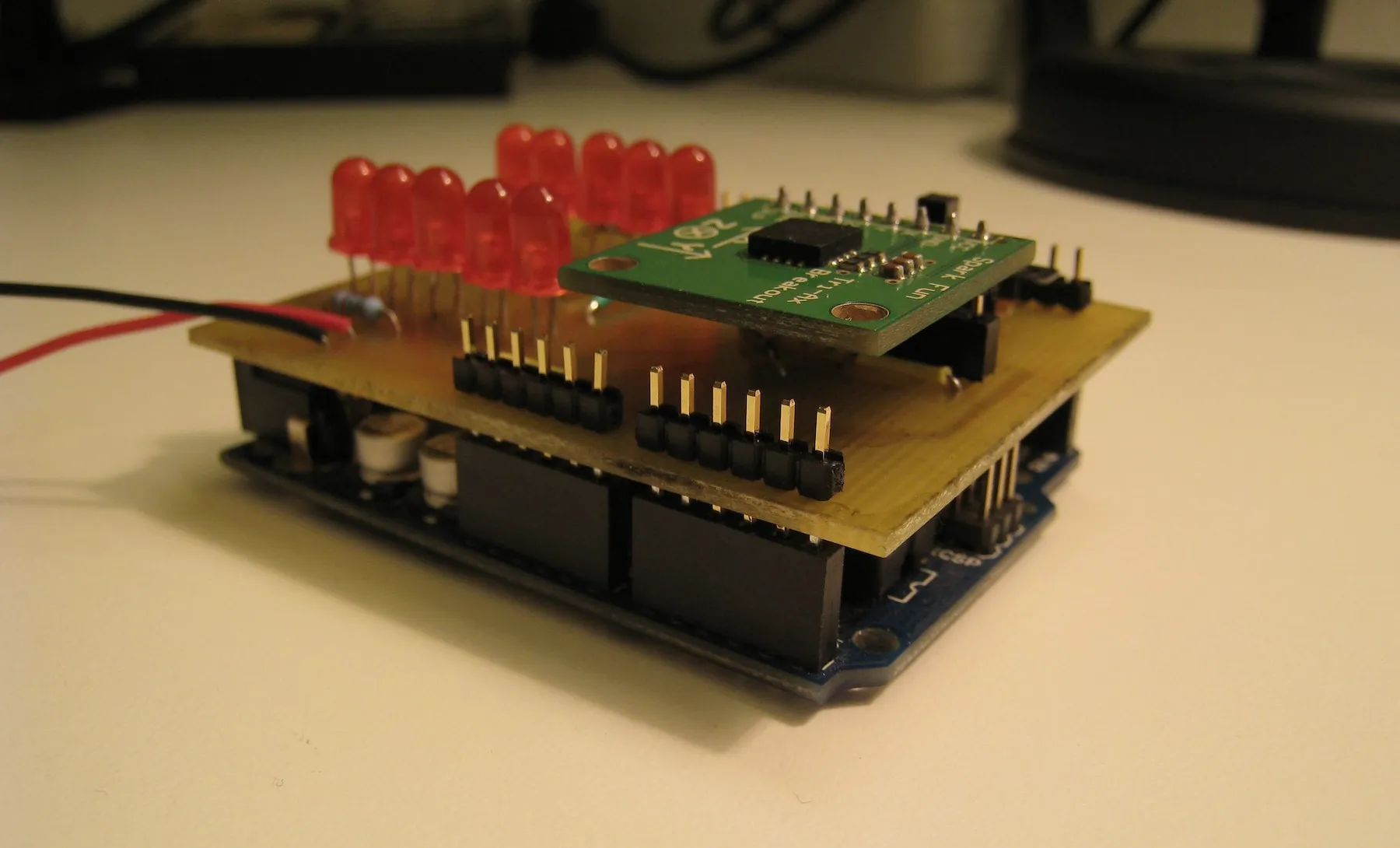
Started as an example project to demonstrate the use of an Arduino shield as sustainable sketch, the BikeBrakeLight was designed in Fritzing and its first prototype was etched and soldered in the Fritzing Lab facilities on the FHP (Fachhochschule Potsdam). The BikeBrakeLight is a demo of a rear-light on your bike, which lights up extra when braking.
Automobiles and scooters have brake lights: red rear lights, which light up when braking. Why would bikes not have such devices? It would improve traffic safety! This was the simple idea from which we started designing the BikeBrakeLight.
We also needed a good example of why and when a designer would resort to creating a sustainable sketch: a working prototype which is more sturdy and more stable than a version possible to make in a laboratory setting with solderless breadboard, dangling modules and re-usable jumper wires. The BikeBrakeLight is a good example of when a designer should create a rigid prototype, because the only way to properly test it is to attach it to your bike, ride around the neighborhood, brake from different riding speeds and test if the lights actually light up as preferred.
The prototype uses an accelerometer to measure the increase and decrease of speed of the bike and determine if the rider brakes or not. This setup frees the system from attaching something physical to the brake system of the bike itself, which differs from bike to bike (different hand brakes, coaster brakes, or fixie), not to mention it would also add extra unsafety as the measuring system could interfere with the braking itself. The only downside of using an accelerometer is that it could also be triggered falsely when the bike would be maneuvered in a not-horizontal position, like cycling uphill.